Providing Laboratory Equipment Access to Scientists in the Global South
Getting access to modern laboratory equipment is a major challenge for scientists in the Global South. This lack of resources slows down scientific progress in these countries and widens the knowledge gap between the North and the South. Many talented scientists feel forced to look for career opportunities abroad, leading to a brain drain.
Objectives
UNESCO's remote access initiative aims to support researchers in countries facing socio-economic challenges or conflict, where access to advanced research facilities is limited. This initiative helps researchers by:
- Providing remote access to a wide range of laboratory equipment
- Reducing their financial burden and reliance on outsourcing and donor funding
- Fostering international collaboration and knowledge sharing with scientists from different regions and disciplines
- Enabling them to conduct experiments for both research and education, thereby optimizing their time management and productivity
Support UNESCO’s Remote Access Initiative
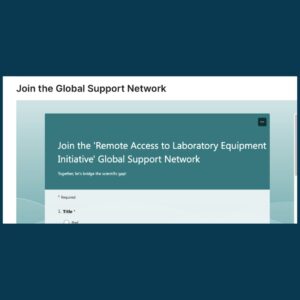
UNESCO is creating a global support network to enable remote access to laboratory equipment worldwide. This network will include:
- Contributors who generously provide access to their equipment,
- Beneficiaries with specific needs and requirements for their research,
- Donors whose support is crucial for the success of this initiative.
UNESCO seeks essential support from the global community to ensure the success of this initiative. Needed support includes financial contributions, facilitating remote access to laboratory equipment, supporting researchers' mobility, spreading the word about the initiative, and other forms of assistance. This support is vital to provide the human, logistical, and financial resources necessary to make a positive impact in all regions in need.
UNESCO, its partners, and cooperating institutes will organize training and support for African scientists as follows:
- Support the travel and accommodation of 1-2 selected scientists, based on a submitted application, to spend one month in the laboratory of the participating entity for training on the equipment. The trained scientists will then serve as focal points for their counterparts in their home institutions.
- Hold 1-2 week open lab training sessions in African countries/regions for groups of scientists. The training will ensure that scientists gain the technical knowledge of the equipment and its remote use.
- Scientists will need to send their samples to the institutions offering remote access to their equipment. The samples will be handled and mounted by the assigned operator, while full measurements and analysis will be performed remotely by the scientists in Africa.
- UNESCO and its partners can compensate the entity for the operator and equipment maintenance.
- Facilitate collaborative research projects that promote knowledge exchange and collaboration between scientists in Africa and the contributing entities.
How to Apply
You will find the application link at the end of the page
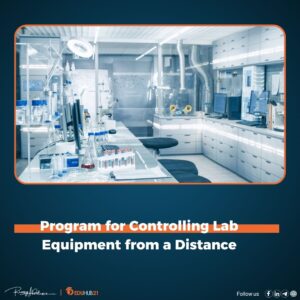
Then, look at this photo