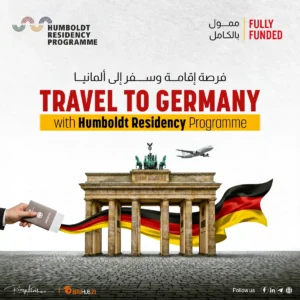
The Humboldt Residency Programme 2026 is an international, interdisciplinary initiative that brings together distinguished researchers, academics, and creative professionals from diverse fields to collaborate on the annual theme:“Democracy 2.26: Designing Political Participation.”
The programme aims to generate applicable new ideas and engage a broad audience beyond the academic sphere.
About the Programme
The programme selectstwelve participantsfrom varied academic, creative, and professional backgrounds, including:
- Former Humboldt Fellows
- Early-career researchers
- Writers
- Artists
- Journalists
- Civil society actors
- Social entrepreneurs
Participants are offered asix-week residencyin the Brandenburg and Berlin region, where they work daily in shared collaborative spaces. This setup allows them to build cross-disciplinary bridges, gain deep insights into each other's work, and explore new pathways for thinking and cooperation.
The programme is not limited to research; participants are also required to design and implement innovative formats for public engagement, such as:
- Debates and public dialogues
- Media appearances
- Interactive workshops
- Blogs
- Social media posts
- Written publications
2026 Theme: Democracy 2.26 — Designing Political Participation
The programme focuses on the challenges facing democratic systems worldwide, including:
- The rise of populist movements
- Erosion of trust in democratic institutions
- Decline in the feeling of representation
- The impact of digitalization on political discourse
- Spread of misinformation
- Influence of economic interests on democratic systems
The programme is grounded in the belief that healthy democracy requires ongoing civic engagement beyond periodic elections, and that strengthening both formal and informal political participation is essential to protecting democratic values.
Suggested Sub-Themes
- Political legitimacy: Can participation strengthen trust in institutions?
- Models of participatory democracy: such as citizens’ assemblies and participatory budgeting
- Representation of marginalized groups: mechanisms to ensure minority voices in decision-making
- Political participation in the digital age: balancing risks and opportunities in the digital sphere
Programme Timeline
The programme runs fromJune to October 2026, and includes:
- 23 June:Virtual opening meeting
- 3–14 August:Two-week residency at Schloss Wiepersdorf
- 14 August – 11 September:Four-week residency in Berlin
- September – October:Remote work to finalize outputs
- 27 October:Virtual closing event
Physical presence ismandatoryfrom3 August to 11 September 2026.
Funding & Support
Funding provided by theAlexander von Humboldt Foundationincludes:
- A monthly allowance for the entire six-week residency
- Travel allowance to and from Germany
- Two-week accommodation at Schloss Wiepersdorf
- Four-week accommodation in a serviced apartment hotel in Berlin
- A budget to organize public events or produce final outputs
The foundation also provides family-friendly housing for participants traveling with dependents, as well as assistance in arranging childcare.
Participant Categories
The programme accepts applicants from the following categories:
1. Creative Leader
2. Three Humboldt Alumni
- Previous recipients of a Humboldt scholarship or award
- Hold an academic position
- Not residing in Germany at the start of the residency
3. Three Early-Career Researchers
- In the final stage of their PhD or holding a PhD awarded less than four years ago
- Hold an academic position
- Not residing in Germany
4. Five Participants from Civil Society, Arts, Journalism, or Social Entrepreneurship
- Do not hold an academic position
The programme is open toall disciplines, provided the applicant’s work has a clear connection to the annual theme.
How to Apply
Applications must be submittedonline onlyto the Alexander von Humboldt Foundation.
Required Documents Before Applying
- CV (maximum 3 pages, PDF format)
- Introductory video (maximum 60 seconds)meeting the following criteria:
- Well-lit and noise-free
- Horizontal format (16:9)
- Allowed file types: mp4, mov, avi, mpeg
- Upload the video viaSmashand include the link in the application
- Well-lit and noise-free
About the Introductory Video
The video should introduce the applicant personally and explain why they wish to join the programme.
It must not exceed60 seconds.
Production quality does not affect evaluation, but the video must haveclear lighting and sound.
Deadline
Application deadline: 15 December 2025.
Applications are evaluated on a rolling basis.
The selection committee meets inearly February 2026, and results are announced inmid-February 2026.